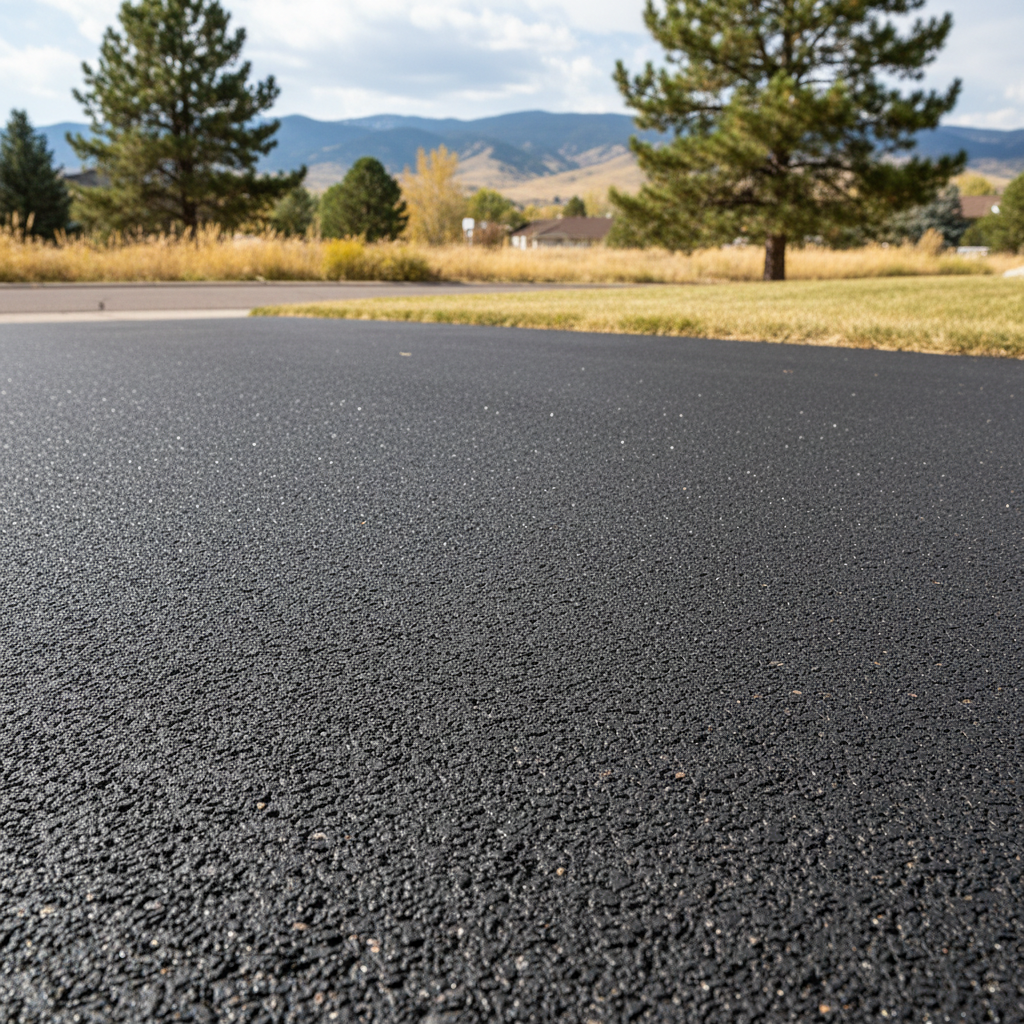
You've probably heard the term 'asphalt milling' floating around, especially if you're looking at getting your driveway or a private road fixed up. It's a smart option for a lot of folks, and it's something we do a ton of here at Loveland Paving Co. But it also brings up a lot of questions. I get them all the time, so I figured I'd lay out the answers to the most common ones right here. No fluff, just what you need to know.
What exactly is asphalt milling?
Alright, let's start with the basics. Asphalt milling, sometimes called 'cold planing' or 'reclaiming,' is basically when we grind up the top layer of an existing asphalt surface. Think of it like a giant cheese grater for your driveway. We use specialized equipment to remove a specific depth of the old, worn-out asphalt, leaving behind a rough, textured surface. We don't remove the whole thing, just the damaged upper part. This process creates a stable base that's ready for a new layer of asphalt. It's a way to recycle the old material and get a fresh start without tearing everything out.
When does milling make sense for my driveway?
Milling is a great option in a few common situations. If your driveway has a lot of cracks, potholes, or is showing signs of alligator cracking (that pattern that looks like alligator skin), but the underlying base is still solid, milling is probably a good fit. It's also ideal if your driveway has become too high over the years from multiple overlays, causing drainage issues or making it difficult to transition to your garage or sidewalk. We see this a lot in older Loveland neighborhoods where driveways have been paved over a few times. If your base is totally shot, though, or you've got major structural problems, then a full remove and replace might be necessary. But for most surface-level issues, milling is the way to go.
What are the big benefits of choosing milling over a full replacement?
There are a few key advantages, and they're pretty significant. First off, it's usually more cost-effective than a full tear-out and replacement. You're not paying for as much new material, and the labor involved can be less intensive. Second, it's faster. We can mill and pave a driveway much quicker than excavating and rebuilding from scratch, which means less disruption for you. Third, it's environmentally friendly. We recycle the milled asphalt, often right back into the new pavement mix or for use as a gravel base on other projects. That's a win-win. Finally, you get a fresh, smooth surface that's built on a stable foundation, giving you a durable driveway that'll last for years.
Can you mill any asphalt surface?
Not always, no. The condition of the existing asphalt is crucial. If the base layer underneath is completely deteriorated, or if there are severe subgrade issues like unstable soil (which we sometimes contend with around the Big Thompson River area after heavy rains), milling might not be enough. Milling addresses the top layers, but it can't fix a fundamentally broken foundation. We always do a thorough inspection to make sure milling is the right solution for your specific situation. I'll tell you straight if it's not going to hold up.
What happens to the old asphalt you mill up?
That's a great question, and it ties into the environmental benefits I mentioned. The material we mill up, often called 'RAP' (Recycled Asphalt Pavement), doesn't just go to a landfill. We haul it away and it gets processed. It can be crushed and reused as aggregate in new asphalt mixes, or it can be used as a base material for other construction projects, like unpaved roads or parking lots. It's a valuable resource, and we make sure it gets put to good use. It's part of doing things smart and efficiently.
How long does a milled and repaved driveway last?
Just like any new asphalt surface, the lifespan of a driveway that's been milled and repaved depends on a few things: the quality of the original base, the new asphalt mix we use, how well it's installed, and how you maintain it. Generally, you can expect a properly milled and repaved driveway to last anywhere from 15 to 25 years, sometimes even longer. Regular sealcoating every few years and promptly addressing any small cracks will significantly extend its life. The freeze-thaw cycles we get here in Loveland, especially in places like the Mariana Butte area, can be tough on pavement, so good maintenance is key.
What's the process like from start to finish?
When you call us, the first thing we'll do is come out and assess your driveway. We'll look at the condition, measure it, and discuss your options. If milling is a good fit, we'll give you a clear quote. Once you give us the go-ahead, we'll schedule the work. On the scheduled day, our crew will come in with the milling machine and grind down the top layer of your existing asphalt to the agreed depth. We'll clean up all the loose material and haul it away. Then, we'll apply a tack coat, which helps the new asphalt adhere. Finally, we'll lay down a fresh layer of hot asphalt, compact it thoroughly, and make sure it's smooth and properly graded for drainage. We'll give you instructions on how long to stay off it, and then you've got a beautiful, durable new driveway.