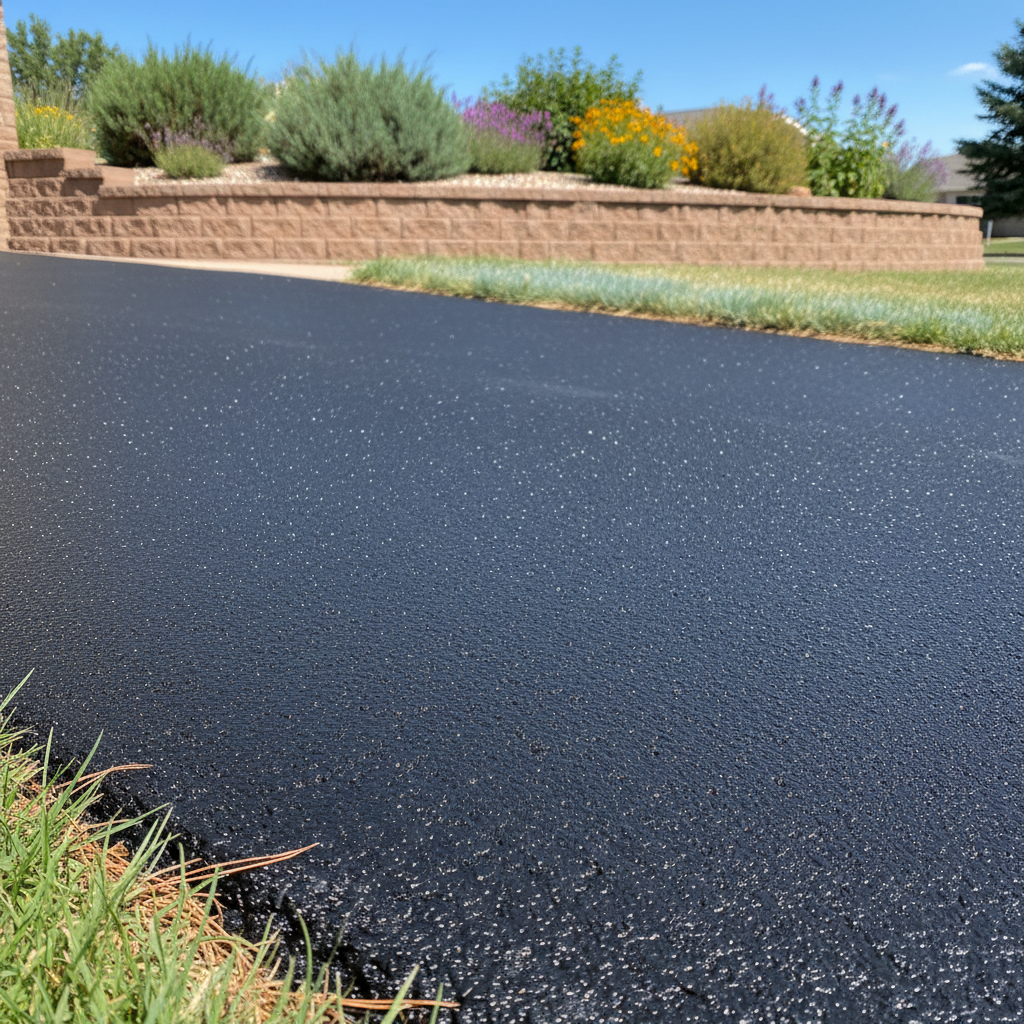
Alright, let's talk about slurry coating. I get a lot of questions from folks around Loveland about their driveways, and slurry coating often comes up. It's a solid maintenance step, but there's a lot of confusion out there about what it is, what it does, and if it's right for your asphalt. So, I'm going to break down the most common questions I hear, straight from my experience working on driveways all over town.
What exactly is slurry coating, and how's it different from sealcoating?
This is probably the number one question I get. Think of sealcoating as a thin, protective layer, kind of like painting over your asphalt. It's mostly for aesthetics and a little surface protection. Slurry coating, on the other hand, is a much thicker, more robust application. It's a mix of asphalt emulsion, aggregates (like sand or fine gravel), water, and some other additives. Because it has those aggregates, it actually fills in small cracks and voids, smooths out minor surface imperfections, and adds a new wearing course to your pavement. It's not just a surface cosmetic; it's a structural improvement for the top layer. It gives your asphalt a fresh, new surface that's more durable than just a sealcoat.
When should I consider slurry coating my driveway?
You should be thinking about slurry coating when your asphalt is showing signs of aging but isn't completely falling apart. If you've got a lot of hairline cracks, some minor raveling (where the aggregate starts coming loose), or the surface just looks really faded and worn, that's a good time. It's a preventative measure, really. You want to get it done before those small issues turn into bigger, more expensive problems like potholes or extensive cracking that would require a full overlay or replacement. Typically, we see driveways needing this kind of treatment every 5-10 years, depending on traffic, original installation quality, and our crazy Loveland weather with its freeze-thaw cycles.
How long does a slurry coat last here in Colorado?
That's a tough one to give an exact number for, because it depends on a few things: the quality of the original asphalt, how much sun it gets, how much traffic, and of course, our specific climate. Here in Loveland, with our intense summer sun and those harsh winters, you can generally expect a good quality slurry coat to last anywhere from 5 to 8 years. If it's a driveway that sees heavy use, like a busy residential street or a property with lots of vehicles, it might be closer to the 5-year mark. But if it's a fairly quiet driveway and it was prepped right, you could definitely push it closer to 8. Proper application is key, and that means doing it when the temperatures are right, not too cold or too hot, and making sure the surface is clean.
Can I just slurry coat over big cracks or potholes?
Absolutely not. Slurry coating is great for minor surface issues, but it's not a miracle cure for structural damage. If you've got cracks wider than, say, a quarter-inch, or any actual potholes, those need to be repaired properly *before* we even think about slurry coating. We're talking crack filling for the smaller ones and patching for the bigger ones. Trying to slurry coat over significant damage is just throwing money away; the damage will telegraph right back through the new layer, and it won't hold up. Think of it like painting a wall with a big hole in it – you gotta fix the hole first.
What's the process like, and how long until I can use my driveway again?
The process usually starts with a good, thorough cleaning of your driveway. We'll sweep it, blow it, and sometimes even power wash it to get rid of all the dirt, debris, and oil spots. Any significant cracks or potholes get pre-repaired. Then, we apply the slurry mix. This is usually done with specialized equipment that spreads it evenly across the surface. It's a pretty skilled job to get it right, making sure the thickness is consistent. As for drying time, you're usually looking at about 24 to 48 hours before you can drive on it. This can vary depending on the temperature and humidity. If it's a cool, cloudy day, it might take longer. If it's sunny and warm, it'll cure faster. We always tell folks to stay off it for at least 24 hours, and 48 is even better, especially for heavier vehicles. You don't want to mess up that fresh surface.
Is slurry coating a DIY project, or should I hire a pro?
Look, I'm a contractor, so you know what I'm going to say, but I'm going to be honest about it. While you *can* buy small kits for sealcoating at the hardware store, slurry coating is a whole different beast. The materials are different, the application equipment is specialized, and getting an even, consistent finish is really tough without experience. It's not just about dumping it on; you need to know how to spread it, how to handle the mix, and how to deal with different sections of the driveway. I've seen plenty of DIY attempts that end up looking patchy, uneven, or just don't last because the application wasn't right. For something that's supposed to protect your investment for years, I really recommend bringing in a professional like Loveland Paving Co. We've got the right gear and the experience to do it right the first time, saving you headaches and money down the road. Especially with our unique soil conditions in some of the older Loveland neighborhoods, you want someone who understands how the ground moves and affects your asphalt.
Hopefully, that clears up some of the questions you've had about slurry coating. It's a valuable maintenance step for your asphalt, and when done correctly, it'll extend the life and improve the look of your driveway significantly.