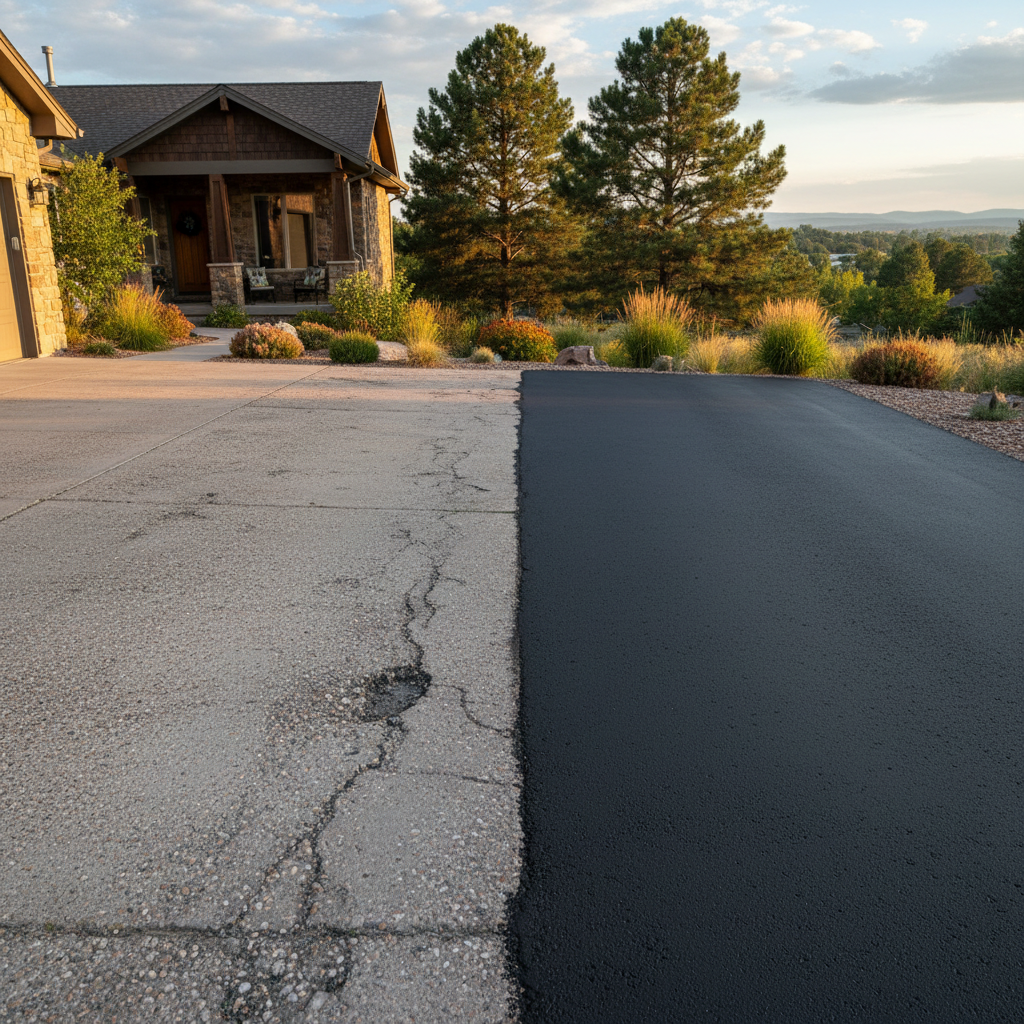
Choosing between a fine slurry or a heavier aggregate mix for a cracked driveway is a common question. Selecting the right application matters around here, especially with the way local clay soils shift and crack asphalt during the brutal freeze-thaw cycles in Loveland, CO.
Loveland Paving Co looks at driveways across neighborhoods from Meadowbrook to Mariana Butte all the time, and homeowners frequently get stuck trying to weigh their choices. The two main slurry coating options can be broken down so you can figure out what makes sense for your property without getting oversold.
Understanding Type I Slurry Seal
Type I uses a very fine aggregate mix. Think of it almost like a heavy paint with some sand thrown in. It fills hairline cracks and seals the surface against moisture, but it does not add structural thickness.
The big appeal here is appearance. Type I dries to a smooth, uniform black finish that makes an older driveway look brand new. It is also lighter on the wallet up front.
However, it wears down faster. If your driveway gets heavy truck traffic or deals with steep slopes near your garage, a Type I coat might start shedding aggregate sooner than you want under the intense summer sun in Loveland, CO.
Stepping Up to Type II Slurry Seal
Type II packs a heavier punch with larger aggregate stones mixed into the emulsion. It fills deeper cracks, handles heavier loads, and builds a thicker protective wearing course over your existing asphalt.
Durability is where Type II shines. It stands up much better to snowplows scraping your driveway in January and resists the thermal cracking we get when temperatures swing forty degrees in a single afternoon in Loveland, CO.
The downside? It costs a bit more initially, and the surface texture is noticeably rougher than a Type I finish. It will not look like a smooth blacktop highway, but it will protect your investment much longer.
Cost and Maintenance Realities
When you are budgeting, remember that cheap sealants usually cost more over ten years because you have to reapply them twice as often. Type I is cheaper per square foot today, but Type II stretches out your maintenance intervals significantly on residential driveways that take a beating from the elements.
Neither option is a magic wand if your base is completely shot. If water has already washed away the sub-base under your concrete apron, no slurry coat is going to save it from sinking.
The Bottom Line for Loveland Homes
If your driveway only has minor oxidation and tiny surface cracks, Type I gives you a clean, cost-effective refresh. But for most typical residential driveways in Loveland, CO dealing with heavy UV exposure and shifting subgrades, Type II is usually the smarter bet for long-term durability. Match the material to what your asphalt actually needs, and you will not have to think about it again for another five to seven years.